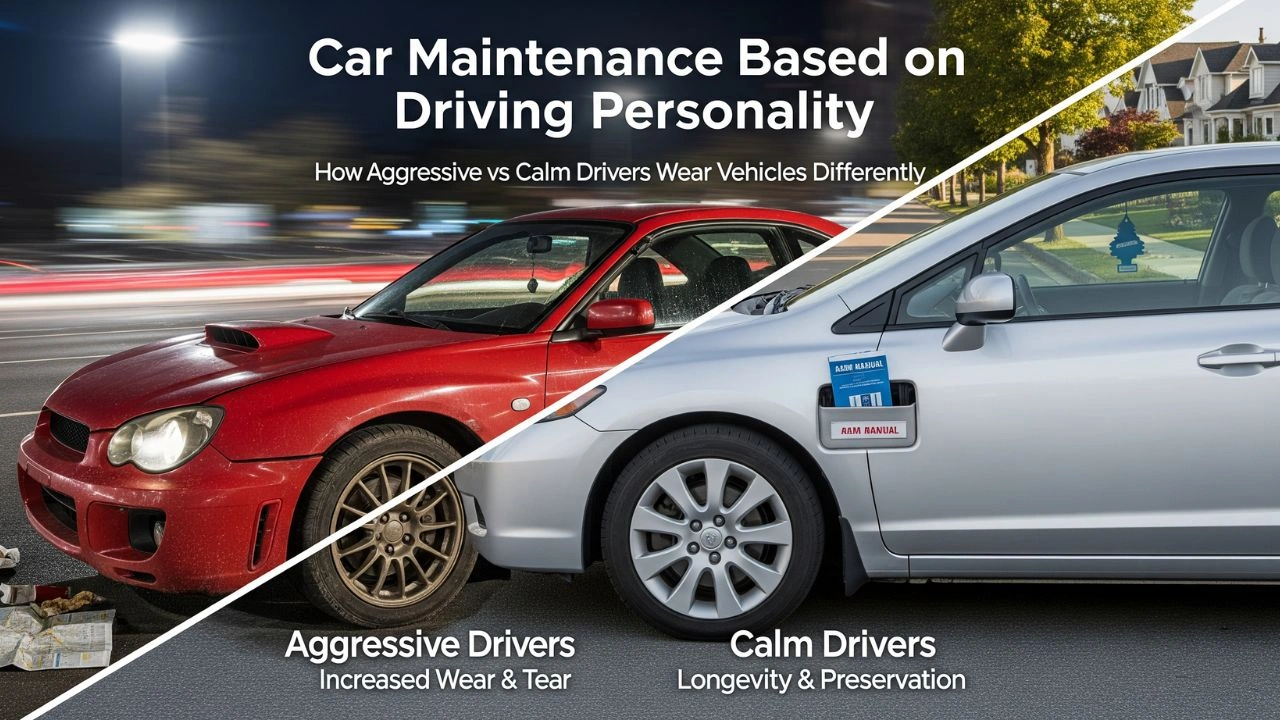
Car Maintenance Based on Driving Personality: Two people can buy the same car on the same day, drive similar distances, and service it at the same dealership—yet one car ages gracefully while the other feels tired and costly within a few years. The difference often comes down to driving personality.
Your driving style—whether aggressive (hard acceleration, late braking, rapid lane changes) or calm (smooth inputs, anticipation, steady cruising)—has a profound impact on how fast components wear, how often maintenance is required, and how long the vehicle remains reliable. This isn’t about judging drivers; it’s about understanding cause and effect so you can plan smarter maintenance, lower costs, and extend your car’s life.
This comprehensive guide breaks down how aggressive and calm driving affects every major system, from brakes and tyres to engines, transmissions, suspensions, and even interiors. You’ll also learn tailored maintenance strategies for each driving personality—and practical tips to reduce wear without changing who you are behind the wheel.
Why Driving Personality Matters More Than Mileage
Mileage alone doesn’t tell the full story of a car’s health. A car driven 60,000 km gently can be in better shape than one driven 30,000 km aggressively.
What Driving Style Influences
- Heat cycles in engines, brakes, and transmissions
- Shock loads on suspension and steering
- Friction and abrasion on tyres and clutches
- Oil degradation and contamination rates
- Electronic component stress from sudden inputs
Aggressive inputs amplify heat and stress, accelerating wear. Calm inputs spread loads gradually, reducing damage over time.
Read Also: Tata Punch 2026: The Most Important Budget SUV Launch for Indian Families
Defining the Two Styles (No Stereotypes—Just Physics)
Aggressive Driving (Characteristics)
- Rapid acceleration and high revs
- Hard braking, often late
- Frequent lane changes
- High-speed cornering
- Stop-start bursts in traffic
Calm Driving (Characteristics)
- Progressive throttle and braking
- Anticipation of traffic flow
- Smooth lane changes
- Steady cruising speeds
- Gentle starts and stops
Neither style is “right” or “wrong.” But they wear vehicles differently—and that should guide maintenance.
Engine Wear: Heat, Oil, and Internal Stress
Aggressive Drivers
- Higher revs and load spikes increase cylinder pressure
- Oil temperatures rise faster, breaking down viscosity
- More blow-by can contaminate oil sooner
- Turbocharged engines see greater boost stress
Maintenance impact:
- Shorter oil-change intervals
- Higher risk of oil consumption
- Faster wear of timing components
- Greater chance of overheating under load
Calm Drivers
- Stable operating temperatures
- Oil lasts closer to its rated life
- Lower peak pressures reduce internal wear
Maintenance impact:
- Oil intervals can safely follow manufacturer guidance
- Lower long-term engine wear
- Better compression retention over time
Smart Tip: Aggressive drivers should use higher-quality synthetic oil and change it 20–30% earlier than the manual suggests.
Transmission & Clutch: Shock vs Smoothness
Aggressive Drivers
- Hard launches strain clutches and torque converters
- Rapid gear changes increase synchronizer wear
- Automatic transmissions experience heat spikes
- Dual-clutch systems can overheat in stop-go sprints
Maintenance impact:
- Clutch replacement sooner (manuals)
- Transmission fluid degrades faster
- Increased risk of jerky shifts and solenoid issues
Calm Drivers
- Progressive engagement reduces clutch glazing
- Lower transmission heat
- Smoother shifts extend component life
Smart Tip: Aggressive drivers should service transmission fluid earlier, even if labeled “lifetime.”
Brakes: The Most Obvious Difference
Aggressive Drivers
- Hard braking = intense heat
- Pads glaze and rotors warp sooner
- Brake dust increases
- ABS and stability systems activate more often
Maintenance impact:
- Pads wear 30–50% faster
- Rotors need resurfacing or replacement sooner
- Brake fluid absorbs heat and moisture faster
Calm Drivers
- Engine braking and anticipation reduce heat
- Pads last longer
- Rotors remain true
Smart Tip: Aggressive drivers benefit from higher-temperature brake pads and annual brake fluid checks.
Tyres: Grip vs Longevity
Aggressive Drivers
- Hard acceleration scrubs tread
- Late braking flat-spots tyres
- High-speed cornering wears shoulders
- Frequent wheelspin shortens tyre life
Maintenance impact:
- Tyres wear unevenly
- More frequent alignments needed
- Lower fuel efficiency
Calm Drivers
- Even tread wear
- Longer tyre life
- Better rolling efficiency
Smart Tip: Aggressive drivers should rotate tyres every 5,000–7,000 km and check alignment more often.
Suspension & Steering: Shock Loads Add Up
Aggressive Drivers
- Rapid lane changes stress bushings
- Hard cornering compresses suspension repeatedly
- Potholes hit at speed amplify damage
Maintenance impact:
- Bushings crack sooner
- Ball joints and tie rods loosen earlier
- Shocks lose damping faster
Calm Drivers
- Gradual weight transfer preserves components
- Fewer shock loads
Smart Tip: If you drive assertively, inspect suspension annually—even if the car feels fine.
Cooling System: Hidden Casualty of Aggression
Aggressive Drivers
- High sustained loads elevate coolant temps
- Fans and pumps work harder
- Coolant degrades faster
Maintenance impact:
- Higher risk of overheating
- Hoses and seals age quicker
Calm Drivers
- Thermal stability extends cooling system life
Smart Tip: Aggressive drivers should flush coolant earlier than scheduled and keep radiators clean.
Exhaust & Emissions Components
Aggressive Drivers
- Frequent high exhaust temperatures
- Catalytic converters face thermal stress
- Sensors (O2, NOx) age faster
Maintenance impact:
- Higher replacement risk over time
- Check-engine lights more likely
Calm Drivers
- Balanced exhaust temperatures
- Emissions components last longer
Smart Tip: If you drive hard, avoid shutting the engine off immediately after spirited driving—let it idle briefly to cool.
Fuel System & Efficiency
Aggressive Drivers
- Lower fuel economy
- Injectors experience higher duty cycles
- Fuel pumps work harder
Maintenance impact:
- More frequent fuel system cleaning
- Higher operating costs
Calm Drivers
- Better mileage
- Cleaner combustion over time
Smart Tip: Aggressive drivers should use top-tier fuel and consider periodic injector cleaning.
Interior Wear: It’s Not Just Mechanical
Aggressive Drivers
- Hard pedal inputs wear pedal pads
- Frequent steering corrections wear wheel leather
- Rapid entry/exit stresses seat bolsters
Calm Drivers
- Slower, smoother interactions
- Interiors age more gracefully
Smart Tip: Seat covers and steering wheel wraps can preserve resale value if you’re an energetic driver.
Electronics & Driver-Assistance Systems
Aggressive Drivers
- Stability control and ADAS intervene more often
- Sensors and actuators see higher duty cycles
Maintenance impact:
- Earlier calibration needs
- Potential sensor wear over time
Calm Drivers
- Systems operate within normal ranges
- Fewer interventions
Maintenance Schedules: One Size Doesn’t Fit All
Aggressive Driver Maintenance Plan
- Oil changes 20–30% earlier
- Brake inspections every service
- Tyre rotations more frequent
- Transmission fluid earlier than “lifetime”
- Annual suspension and cooling checks
Calm Driver Maintenance Plan
- Follow manufacturer intervals
- Focus on preventive inspections
- Prioritize fluid quality over frequency
The key: Match maintenance to how you actually drive—not just what the manual says.
Cost Comparison Over 5 Years (Typical Use)
- Aggressive driving: Higher spend on brakes, tyres, fluids, suspension
- Calm driving: Lower total ownership cost, better resale value
Over five years, aggressive habits can add 15–30% more maintenance cost, even with the same mileage.
Read Also: Hyundai IONIQ 6: A Bold, Aerodynamic Electric Sedan Shaping the Future of EV Luxury
Can Aggressive Drivers Reduce Wear Without Changing Personality?
Yes. You don’t need to become a different driver—just optimize the margins.
Practical Mitigation Tips
- Warm up gently; avoid hard revs cold
- Use quality fluids and parts
- Upgrade brakes and tyres to match your style
- Anticipate potholes—even at speed
- Cool down after spirited drives
Conclusion: Drive How You Like—Maintain How You Should
Your driving personality is part of who you are. The goal isn’t to change it—it’s to understand its mechanical consequences and adapt maintenance accordingly.
- Aggressive drivers enjoy responsiveness and control, but must budget for faster wear and smarter servicing.
- Calm drivers benefit from lower costs, longer component life, and higher resale.
When maintenance aligns with driving style, cars last longer, perform better, and cost less in the long run.
Whether you’re assertive or relaxed behind the wheel, the smartest move is the same: let your driving personality guide your maintenance strategy—not surprise you with repairs.