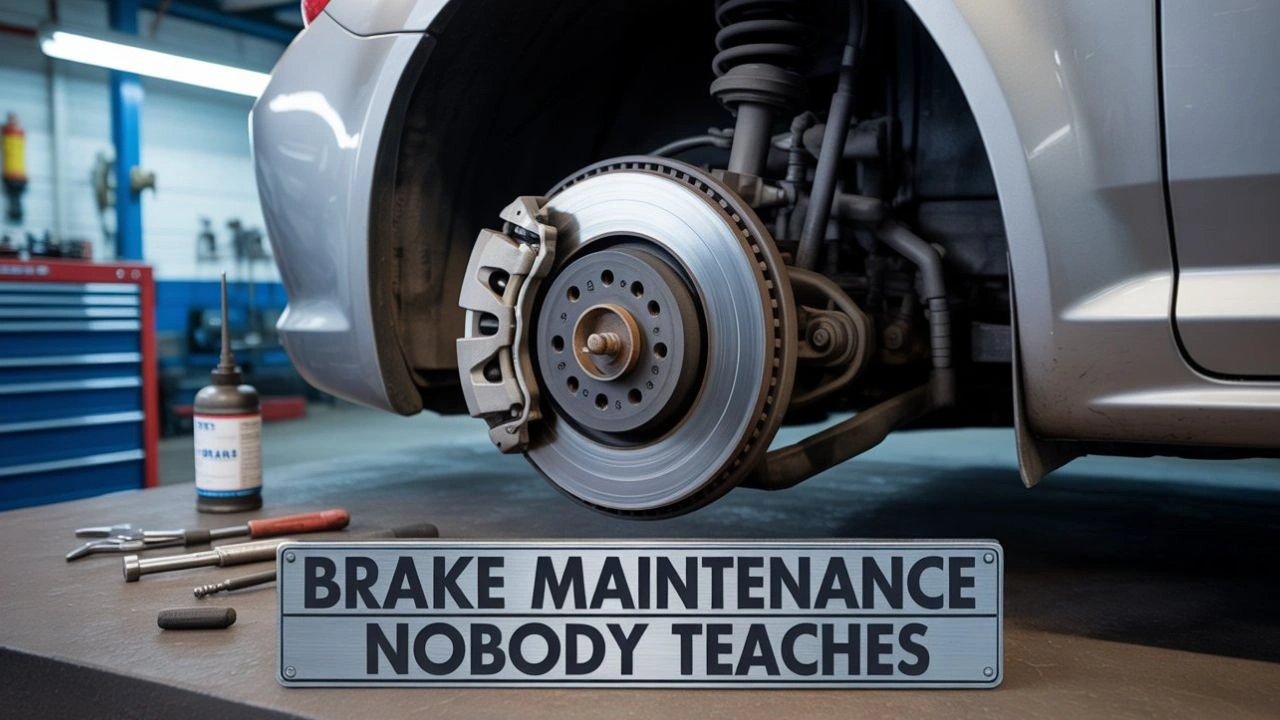
Brake Maintenance Nobody Teaches: Most car owners believe brake wear is simple: drive more, brakes wear faster. That assumption feels logical—but it’s wrong.
In reality, how you drive matters far more than how far you drive. Two cars with identical mileage can have completely different brake conditions. One may still have healthy pads and smooth rotors, while the other needs a full brake overhaul. The difference isn’t luck or brand quality—it’s driving habits.
Brake systems are designed to convert kinetic energy into heat. Poor driving habits create excessive heat, uneven pressure, corrosion, and mechanical stress—destroying brake components long before mileage alone should. Unfortunately, most drivers are never taught how their everyday habits quietly shorten brake life.
This in-depth guide explains why brakes fail early, the hidden behaviors that damage them faster than mileage, and how to extend brake life without driving slower or sacrificing safety.
Why Mileage Is a Poor Indicator of Brake Health
Mileage measures distance—not stress.
What Actually Wears Brakes
- Heat cycles (not distance)
- Pressure intensity
- Frequency of braking
- Cooling time between stops
- Environmental exposure
A car driven 30,000 km aggressively in traffic can destroy brakes faster than a car driven 80,000 km calmly on highways.
Brakes don’t wear from rolling—they wear from stopping.
Read Also: Flood-Exposed Vehicles: Step-by-Step Post-Water Damage Inspection Guide
The Real Enemy of Brake Systems: Heat
Every time you press the brake pedal, friction converts motion into heat. Brakes are designed to handle heat—but only within limits.
Why Excess Heat Is Dangerous
- Warps brake rotors
- Glazes brake pads
- Boils brake fluid
- Weakens caliper seals
- Causes uneven wear
Most premature brake failures trace back to repeated overheating, not poor materials.
Driving Habit #1: Late, Hard Braking (The Silent Brake Killer)
This is the single most destructive habit.
What Happens During Hard Braking
- Pads clamp instantly at high force
- Rotors experience rapid temperature spikes
- Heat concentrates unevenly
- Metal expands and contracts violently
Repeated late braking leads to:
- Warped rotors
- Vibration while braking
- Shortened pad life
- Brake fade under stress
Brakes prefer gradual energy release—not emergency-style punishment.
Driving Habit #2: Riding the Brakes in Traffic
Many drivers lightly keep their foot on the brake pedal in slow traffic.
Why This Is Bad
- Pads stay in constant contact
- Heat builds without cooling
- Calipers never fully release
- Accelerates pad glazing
This habit:
- Destroys pads quietly
- Causes squealing noises
- Leads to uneven wear
Brakes need time off—not constant light pressure.
Driving Habit #3: Tailgating (Brakes Pay the Price)
Following too closely forces constant braking.
Brake Consequences of Tailgating
- Frequent brake applications
- No time for gradual deceleration
- Repeated heat cycles
- Higher wear per kilometer
Maintaining distance isn’t just safer—it’s brake maintenance in motion.
Driving Habit #4: Downhill Braking Without Engine Braking
Long downhill stretches are brutal for brakes.
What Happens on Descents
- Continuous braking keeps pads hot
- Rotors never cool
- Brake fluid temperature rises
- Fade risk increases
Drivers who rely solely on brakes downhill often experience:
- Burning smell
- Reduced braking power
- Premature rotor damage
Engine braking exists to save brakes—not replace them.
Driving Habit #5: Aggressive Acceleration Followed by Braking
Accelerate hard → brake hard → repeat.
Why This Pattern Is Brutal
- Generates unnecessary kinetic energy
- Forces brakes to absorb extra heat
- Wastes fuel and brake material
This stop-start aggression:
- Wears pads faster
- Stresses calipers
- Reduces brake consistency
Smooth acceleration saves brakes before braking even begins.
Driving Habit #6: Ignoring Brake Cooling Time
Brakes need cooling—especially after heavy use.
Common Mistake
- Hard braking → immediate stop → parking
This traps heat:
- Pads imprint on hot rotors
- Causes uneven deposits
- Leads to brake judder later
Allow light rolling or gentle cooling before stopping after heavy braking.
Driving Habit #7: Driving with Heavy Loads Regularly
More weight = more kinetic energy.
Brake Impact of Heavy Loads
- Increased stopping force required
- Higher pad pressure
- Faster rotor wear
- Elevated brake temperatures
Drivers who frequently overload vehicles or tow without brake upgrades often experience:
- Rapid pad wear
- Overheated brakes
- Frequent replacements
Driving Habit #8: City Driving vs Highway Driving (The Truth)
City driving destroys brakes faster than highways—even at lower speeds.
Why City Driving Is Worse
- Constant stop-and-go
- Minimal cooling time
- Low-speed brake dragging
- Moisture and dust exposure
Highway drivers:
- Brake less frequently
- Allow long cooling intervals
- Experience smoother wear
10,000 km in traffic can equal 40,000 km of highway brake wear.
Environmental Factors That Amplify Bad Habits
Your driving habits interact with the environment.
High Humidity & Rain
- Rust forms on rotors
- Pads stick to discs
- Increases initial wear
Dusty Conditions
- Abrasive particles grind pads
- Accelerates rotor scoring
Mountain Regions
- Heat overload from descents
Bad habits + harsh environment = brake system disaster.
Brake Components Most Affected by Driving Style
Brake Pads
- First to wear
- Sensitive to heat and pressure
Rotors (Discs)
- Warp from uneven heat
- Develop thickness variation
Calipers
- Stick from heat damage
- Uneven pad wear
Brake Fluid
- Absorbs moisture
- Boils under extreme heat
Driving habits affect the entire system—not just pads.
Why Brake Fluid Is the Most Ignored Victim
Many drivers never change brake fluid.
Why Driving Habits Matter Here
- Hard braking heats fluid
- Moisture lowers boiling point
- Boiled fluid causes spongy pedal
Aggressive drivers should change brake fluid more often than recommended.
Warning Signs Your Driving Habits Are Killing Your Brakes
- Frequent pad replacements
- Steering wheel vibration during braking
- Burning smell after short drives
- Squealing or grinding noises
- Uneven pad wear left vs right
These aren’t “bad brakes”—they’re habit feedback.
How to Extend Brake Life Without Driving Slower
You don’t need to crawl on the road.
Smart Brake-Saving Techniques
- Brake earlier, not harder
- Release brakes fully between applications
- Maintain safe following distance
- Use engine braking downhill
- Anticipate traffic flow
Smooth driving protects brakes more than low speed ever could.
Maintenance Adjustments Based on Driving Style
If You Drive Aggressively
- Inspect brakes every service
- Upgrade to heat-resistant pads
- Change brake fluid early
- Check caliper slide pins frequently
If You Drive Calmly
- Stick to standard intervals
- Focus on corrosion prevention
- Periodic cleaning is enough
Maintenance should match behavior—not mileage charts.
Brake Upgrades That Help Habit-Heavy Drivers
Some upgrades compensate for habits:
- Better brake pads (heat-resistant)
- Slotted or ventilated rotors
- High-temperature brake fluid
But upgrades do not fix poor habits—they only delay damage.
Cost Comparison: Habits vs Mileage
Over 5 years:
- Aggressive city driver → 2–3 brake jobs
- Calm mixed driver → 1 brake job
Difference:
- Thousands in parts and labor
- Reduced resale value
- Increased safety risk
Brakes punish habits financially.
Read Also: Brake Maintenance Nobody Teaches: How Driving Habits Destroy Brake Systems Faster Than Mileage
Why Mechanics Rarely Explain This
Brake jobs are profitable.
Driving education is not.
Most workshops replace parts—but don’t address why they failed early. Understanding habits empowers owners to reduce repairs—which the industry doesn’t always emphasize.
Quick Brake Preservation Checklist
- Maintain following distance
- Avoid brake riding
- Use engine braking
- Cool brakes after heavy use
- Match maintenance to driving style
Conclusion: Brakes Don’t Fail by Distance—They Fail by Behavior
Brake systems don’t measure kilometers.
They measure heat, pressure, and abuse.
If your brakes wear out quickly, it’s rarely because the car is bad—it’s because driving habits are quietly punishing the system every day.
The good news?
Changing how you brake—without changing where you go—can:
- Double brake lifespan
- Reduce repair costs
- Improve safety
- Make driving smoother
Brake maintenance nobody teaches is simple but powerful:
Your right foot matters more than your odometer.
Once you understand that, your brakes will last longer—mile after mile.