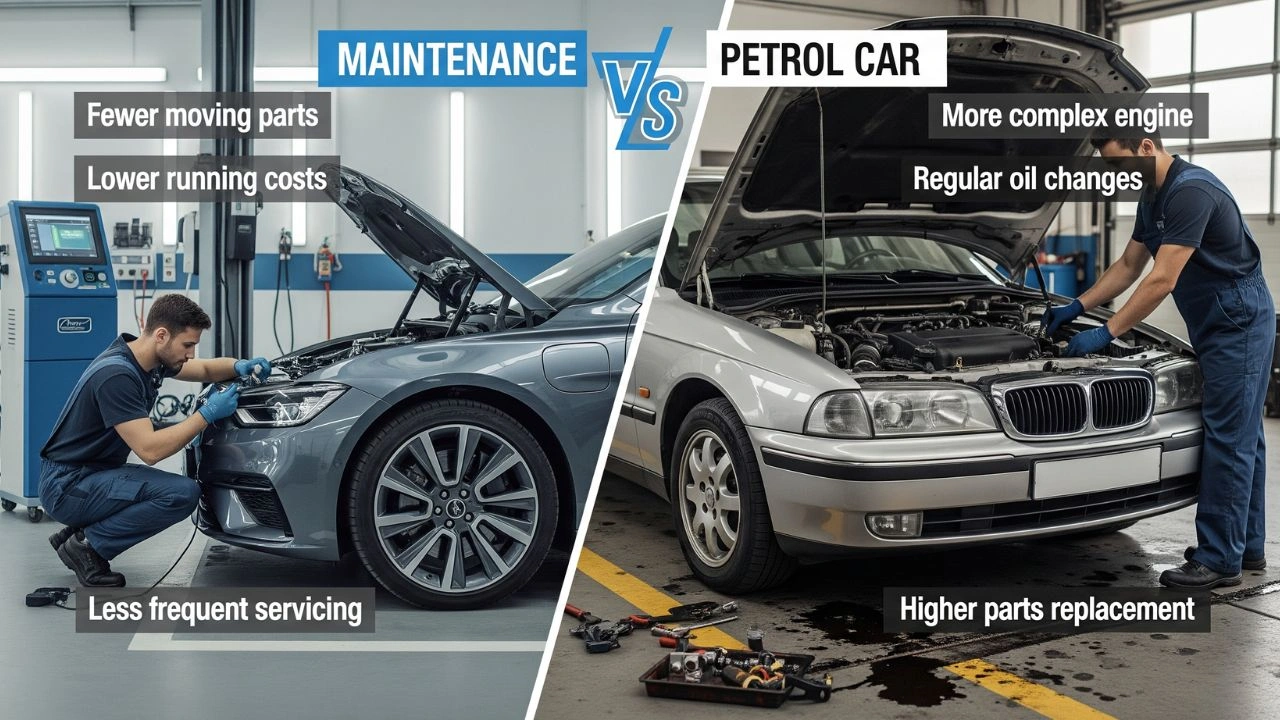
Electric vs Petrol Car Maintenance: The debate between electric cars and petrol cars usually starts with fuel prices, range, and environmental impact. But for most owners, the real surprise comes after purchase, when long-term maintenance and ownership costs begin to surface. Many buyers enter EV ownership expecting almost zero maintenance, while petrol car owners assume they already understand all costs involved.
The reality is more complex.
Both electric and petrol cars have hidden maintenance costs that are rarely discussed at the showroom. Some costs appear slowly over time, others strike suddenly, and many depend on driving habits, climate, and infrastructure. Understanding these differences before buying can save you thousands and prevent unpleasant surprises.
This in-depth guide breaks down electric vs petrol car maintenance, exposes the hidden costs most owners discover too late, and helps you decide which option truly fits your long-term needs.
Why Maintenance Costs Matter More Than Purchase Price
Many buyers focus heavily on:
- Ex-showroom price
- Fuel or charging cost per km
- Government incentives
But maintenance and repairs over 5–10 years often cost more than fuel itself, especially as vehicles age.
The Truth About Ownership Costs
- Maintenance is predictable for petrol cars—but frequent
- Maintenance is infrequent for EVs—but sometimes expensive
- Unexpected repairs hurt budgets more than regular servicing
Understanding hidden costs upfront prevents regret later.
Read Also: Skoda Superb 2026: The Ultimate Executive Sedan Returns Stronger Than Ever
The Big Myth: “Electric Cars Have Almost Zero Maintenance”
This is the most common misconception.
Electric cars do have fewer moving parts, but fewer does not mean none, and it certainly doesn’t mean cheap forever.
What EVs Don’t Have (True)
- Engine oil changes
- Spark plugs
- Timing belts
- Exhaust systems
What EVs Still Have (Often Ignored)
- Coolant systems (battery + motor)
- Brake systems
- Suspension components
- High-voltage electronics
- Software-dependent components
EV maintenance is simpler—but not maintenance-free.
Petrol Car Maintenance: Familiar but Constant
Petrol cars have been around for decades, and most owners already expect regular servicing.
Common Petrol Car Maintenance Items
- Engine oil and oil filter
- Air and fuel filters
- Spark plugs
- Belts and hoses
- Exhaust components
These costs are:
- Smaller per visit
- More frequent
- Easier to predict
Petrol car ownership is like a subscription—small payments, often.
Hidden Maintenance Costs in Electric Cars (EVs)
Let’s start with the surprises EV owners often discover too late.
1. Battery Degradation and Replacement Anxiety
The battery is the heart of an electric car—and its most expensive component.
What Owners Expect
- Battery lasts the life of the car
- Warranty covers everything
What Really Happens
- Battery capacity slowly degrades
- Real-world range drops over time
- Warranty usually covers failure, not gradual loss
Even a 15–20% range drop can:
- Reduce usability
- Affect resale value
- Force earlier replacement than expected
Battery replacement, if needed outside warranty, is extremely expensive.
2. Battery Cooling System Maintenance
Most owners don’t realize EV batteries have dedicated cooling systems.
These include:
- Coolant
- Pumps
- Sensors
- Heat exchangers
Hidden Cost Reality
- Coolant replacement intervals exist
- Pump or valve failure is costly
- Repairs require specialized technicians
Petrol engines also use coolant—but EV battery cooling is more sensitive and less forgiving.
3. Brake System Corrosion (Yes, Really)
EVs use regenerative braking, which reduces brake pad wear. Sounds good—until it isn’t.
Hidden Issue
- Brake pads and discs are used less often
- Moisture causes rust buildup
- Calipers can seize over time
Many EV owners face full brake replacements earlier than expected, not due to wear—but corrosion.
4. Tyres Wear Faster on EVs
EVs are:
- Heavier (due to batteries)
- Instant-torque machines
This leads to:
- Faster tyre wear
- More frequent tyre replacement
- Higher tyre costs (special EV-rated tyres)
Tyres often become one of the biggest recurring EV expenses.
5. Software, Sensors, and Electronics
EVs are software-driven vehicles.
Hidden Cost Areas
- Sensor calibration after minor accidents
- Software glitches requiring dealership intervention
- Paid feature unlocks or subscriptions (in some brands)
Petrol cars have electronics too—but EVs depend on them far more deeply.
Hidden Maintenance Costs in Petrol Cars
Petrol cars feel familiar—but they come with long-term costs owners often underestimate.
1. Engine Wear and Ageing
Petrol engines contain:
- Hundreds of moving parts
- High temperatures
- Continuous friction
As cars age:
- Oil consumption increases
- Seals harden
- Gaskets leak
These repairs are gradual but inevitable.
2. Transmission and Clutch Replacement
Depending on driving style:
- Manual clutch replacements are common
- Automatic transmissions need fluid changes
- Neglect leads to expensive failures
EVs don’t have traditional gearboxes—but petrol cars almost always do.
3. Exhaust System Replacement
One of the most ignored long-term costs.
Petrol cars have:
- Catalytic converters
- Oxygen sensors
- Mufflers
These components:
- Age with heat
- Are expensive to replace
- Often fail after warranty
EVs completely avoid this category.
4. Fuel System Problems Over Time
As petrol cars age:
- Fuel injectors clog
- Pumps weaken
- Sensors fail
These problems cause:
- Poor mileage
- Rough running
- Expensive diagnostics
5. Heat and Oil-Related Damage
Petrol engines constantly battle:
- Heat
- Friction
- Oil degradation
Skipping oil changes or using poor-quality oil dramatically shortens engine life.
Servicing Frequency: EV vs Petrol
Electric Cars
- Fewer scheduled service visits
- Longer gaps between services
- Higher cost if something fails
Petrol Cars
- More frequent services
- Smaller bills
- Easier access to independent garages
EVs save time; petrol cars offer flexibility.
Repair Ecosystem: An Overlooked Cost Factor
EV Reality
- Limited service centers
- Brand-dependent repairs
- Fewer independent specialists
- Higher labour charges
Petrol Car Reality
- Wide network of mechanics
- Affordable local repairs
- Easier spare availability
In emergencies, petrol cars are easier to fix anywhere.
Climate Plays a Huge Role in Hidden Costs
Hot Climates
- EV battery degradation accelerates
- Petrol cars face oil and cooling stress
Cold Climates
- EV range drops
- Petrol cars suffer cold-start wear
Your location directly affects which car costs more to maintain.
Resale Value: The Long-Term Cost Nobody Calculates
EV Resale Challenges
- Buyers worry about battery health
- Older EV tech feels outdated faster
- Range degradation affects value
Petrol Car Resale Strengths
- Familiar technology
- Easier inspection
- Predictable ageing
This resale difference significantly impacts total cost of ownership.
What Owners Usually Realize Too Late
EV Owners Often Say:
- “I didn’t expect tyres to cost this much”
- “Battery degradation worries me now”
- “Service options are limited”
Petrol Owners Often Say:
- “Maintenance keeps adding up every year”
- “Fuel and oil costs never stop”
- “Big repairs come after warranty”
Both sides experience surprises—just different ones.
Which Is Cheaper to Maintain Long-Term?
Short Term (0–3 Years)
- EVs usually cheaper
- Fewer service visits
- Lower running cost
Medium Term (3–6 Years)
- Costs begin to balance
- EV tyres and brake issues emerge
- Petrol cars need more repairs
Long Term (7–10 Years)
- EV battery health becomes critical
- Petrol engines show wear but are repairable
- Ownership experience varies widely
There is no universal winner—only better alignment with usage.
Who Should Choose an Electric Car?
Electric cars make more sense if you:
- Drive mostly in cities
- Have reliable home charging
- Plan to sell within warranty period
- Value low daily running costs
- Prefer minimal routine servicing
Who Should Choose a Petrol Car?
Petrol cars still make sense if you:
- Drive long distances frequently
- Live in areas with limited EV support
- Keep cars for 10+ years
- Want easy repairs anywhere
- Prefer predictable ageing over tech uncertainty
How to Avoid Hidden Costs (For Both Types)
Smart Ownership Tips
- Read warranty details carefully
- Budget for tyres and suspension
- Follow maintenance schedules strictly
- Avoid skipping preventive care
- Choose proven models over first-gen tech
Maintenance costs hurt less when they’re expected.
Conclusion: The Real Cost Is Not What You Think
The choice between electric and petrol cars is no longer about which is “cheaper” or “better.” It’s about which hidden costs you’re more prepared to handle.
- Electric cars reduce routine maintenance but introduce battery and technology-related risks
- Petrol cars demand frequent care but offer repair flexibility and long-term familiarity
The biggest mistake owners make is assuming one has no maintenance and the other is outdated. In reality, both require smart ownership.
If you understand the hidden costs early, neither choice will disappoint you. If you ignore them, both can surprise you—expensively.